Showing posts with label Science. Show all posts

Thursday, January 8, 2015

compounds tarnishing Taj Mahal found by scientists


An international team of scientists have found exactly what is tarnishing Taj Mahal's pristine white marble.

Every several years, the Archeological Survey of India apply a clay mask to India's iconic but yellowing Taj Mahal to remove layers of grime and reveal the white marble underneath.

Now scientists are getting to the bottom of what kinds of pollutants are discolouring one of the world's celebrated wonders.

In what is the first published study that has looked closely at what specific compounds are causing it to appear yellow, scientists have conclude that black carbon and brown carbon from the burning of trash and fuels are among the primary pollutants tarnishing the monument of love.

The latest findings will now help inform efforts to protect the mausoleum and other surfaces from pollution.

Mike H Bergin and Sachchida Nand Tripathi from the American Chemical Society note that Indian officials have tried to reduce the effects of pollution on the Taj Mahal by restricting nearby traffic and limiting local industrial emissions.

But despite regulations and an occasional deep clean, the domes and minarets continue to accrue a layer of soot.

Researchers analyzed particles in the air and on marble samples near the main dome over several months.

Using a novel method they developed, the team estimated how these specks reflect light and therefore affect the color of the building.

In the future, their approach could be used to craft strategies to address the chronic yellowing and improve air quality, they say.

Tuesday, September 30, 2014

Wildlife Numbers Drop by Half Since last four decades

Earth lost half its wildlife in the past four decades, according to the most comprehensive study on animal populations to date, a far larger decline than has been previously reported.

The latest analysis was done by scientists at the wildlife group WWF, the Zoological Society of London and other organizations. Based on an analysis of thousands of vertebrate species, it concludes that overall animal populations fell by 52% between 1970 and 2010.

The animal population decline was seen everywhere—in rivers, on land and in the seas—and is mainly the result of increased habitat destruction, hunting and fishing, the report said. Climate change is also believed to be a factor, though its consequences are harder to measure.

The previous WWF report analyzing animal populations was published in 2012 and it suggested a decline of 28%. The latest report has 15% more data than the previous one; it is more representative of tropical species; and it includes an improved methodology.

The fastest declines were seen in rivers and other freshwaters systems, where populations have fallen 76% since 1970. By comparison, terrestrial and marine populations each fell 39%.

While biodiversity continues to decline in both temperate and tropical parts of the world, the downward trend is greater in the tropics.

The most dramatic decline was in Latin America, where overall populations of mammals, birds, reptiles, amphibians and fish fell 83%. Asia-Pacific wasn't too far behind, though.

The new findings are calculated using the WWF's "Living Planet Index," a measure of biodiversity based on trends in 10,000 populations of about 3,000 animal species.

The WWF has been compiling its index since 1998. It tracks a large number of animal populations just as a stock market index tracks the value of a group of stocks. The data used in compiling the index are population size, density or a measure of abundance over a length of time.

In a separate section, the WWF report also tries to measure the state of humanity's ability to live in a sustainable way. With the planet's population expected to swell by another 2.4 billion people by 2050, the challenge of providing everyone with food, water and energy will be a difficult one.

The report analyzes sustainability by calculating a global "ecological footprint," which measures the area required to supply the ecological goods and services we use. It concludes that humanity currently needs the regenerative capacity of 1.5 Earths to supply these goods and services each year.

The study says: "This 'overshoot' is possible because—for now—we can cut trees faster than they mature, harvest more fish than the oceans can replenish, or emit more carbon into the atmosphere than the forests and oceans can absorb." Since the 1990s, we have reached that overshoot by the ninth month of each year, it adds.

"It's a very loud wake-up call," said Carter Roberts, president and chief executive officer of WWF US, in an interview. "As we lose natural capital, people lose the ability to feed themselves and to provide for their families—it increases instability exponentially. When that happens, it ceases to be a local problem and becomes a global one."

Friday, September 5, 2014

Telepathic message sent across continents through internet

http://www.crystalinks.com/telepathy500a.jpgFOR the first time, scientists have been able to send a simple mental message from one person to another without any contact between the two, thousands of kilometres apart in India and France.

Research led by experts at Harvard University shows technology can be used to transmit information from one person’s brain to another’s even if they are thousands of kilometres away. “It is kind of technological realisation of the dream of tele­pathy, but it is definitely not magical,” Giulio Ruffini, a theoretical physicist and co-author of the research, said from Barcelona. “We are using technology to interact electromagnetically with the brain.”

For the experiment, one person wearing a wireless, internet-linked electro-encephalogram, or EEG, would think a simple greeting, such as “hola” or “ciao”. A computer translated the words into digital binary code in a series of 1s or 0s. This message was emailed from India to France, and delivered via robot to the receiver, who, through non-invasive brain stimulation, could see flashes of light in their peripheral vision.

The subjects receiving the message did not hear or see the words themselves, but were correctly able to report the flashes of light that corresponded to the message.

“We wanted to find out if one could communicate directly between two people by reading out the brain activity from one person and injecting brain activity into the second person, and do so across great physical distances by leveraging existing communication pathways,” said co-author Alvaro Pascual-Leone, professor of neurology at Harvard Medical School. “One such pathway is, of course, the internet.”

The proof of principle that was reported in the journal PLOS ONE was still rudimentary, he said. “We hope that in the longer term this could radically change the way we communicate with each other,” Professor Ruffini said.

Wednesday, August 27, 2014

ultra-fast lasers turns quartz glass into metal

Scientists at the Vienna University of Technology have been able to change the properties of quartz glass into metal for very brief moments using laser pulses. Image by Vienna University of Technology 


In an advance that can lead to ultra-fast light based electronics, scientists have used laser pulses to change the properties of quartz glass into metal.

Quartz glass does not conduct electric current, it is a typical example of an insulator. With ultra-short laser pulses, however, the electronic properties of glass can be fundamentally changed within femtoseconds.

If the laser pulse is strong enough, the electrons in the material can move freely. For a brief moment, the quartz glass behaves like metal. It becomes opaque and conducts electricity.

This change of material properties happens so quickly that it can be used for ultra-fast light based electronics.

Scientists at the Vienna University of Technology (TU Wien) have now managed to explain this effect using large-scale computer simulations.

In recent years, ultra-short laser pulses of only a few femtoseconds have been used to investigate quantum effects in atoms or molecules.

Now they can also be used to change material properties. In an experiment at the Max-Planck Institute in Garching, Germany, electric current has been measured in quartz glass, while it was illuminated by a laser pulse.

After the pulse, the material almost immediately returns to its previous state.

TU Wien researchers explained this peculiar effect, in collaboration with researchers from the Tsukuba University in Japan.

Quantum mechanically, an electron can occupy different states in a solid material. It can be tightly bound to one particular atom or it can occupy a state of higher energy in which it can move between atoms.

"The laser pulse is an extremely strong electric field, which has the power to dramatically change the electronic states in the quartz," said Georg Wachter.

"The pulse can not only transfer energy to the electrons, it completely distorts the whole structure of possible electron states in the material," said Wachter.

That way, an electron which used to be bound to an oxygen atom in the quartz glass can suddenly change over to another atom and behave almost like a free electron in a metal.

Once the laser pulse has separated electrons from the atoms, the electric field of the pulse can drive the electrons in one direction, so that electric current starts to flow.

Extremely strong laser pulses can cause a current that persists for a while, even after the pulse has faded out.

Sunday, August 24, 2014

Google is building the largest information store in human history

Picture for representational purpose. 


Google is building the largest store of information in human history — a knowledge base that autonomously gathers and merges data from across the web to provide unprecedented access to all facts about the world.

The search giant is building Knowledge Vault, a type of knowledge base — a system that stores information so that machines as well as people can read it. Google’s existing knowledge base, called Knowledge Graph, relies on crowdsourcing to expand its information.

However, humans could only take it so far so Google decided to automate the process.

It started building the Vault by using an algorithm to automatically pull in information from all over the web, using machine learning to turn the raw data into usable pieces of knowledge.

Knowledge Vault has pulled in 1.6 billion facts to date. Of these, 271 million are rated as “confident facts”, to which Google’s model ascribes a more than 90 per cent chance of being true, New Scientist reported.

Tom Austin, a technology analyst at Gartner in Boston, said that the world’s biggest technology companies are racing to build similar vaults.

“Google, Microsoft, Facebook, Amazon and IBM are all building them, and they’re tackling these enormous problems that we would never even have thought of trying 10 years ago,” he said.

Google researcher Kevin Murphy and his colleagues will present a paper on Knowledge Vault at the Conference on Knowledge Discovery and Data Mining in New York.

Thursday, August 21, 2014

Animal Calls More like Language

Animal calls more like language: StudyThe calls of many animals, from whales to wolves, might contain more language-like structure than previously thought, according to a new study.

Researchers analyzed the vocal sequences of seven different species of birds and mammals and found that the vocal sequences produced by the animals appear to be generated by complex statistical processes, more akin to human language.

Many species of animals produce complex vocalizations such as the mockingbird which can mimic over 100 distinct song types of different species, or the rock hyrax, whose long string of wails, chucks and snorts signify male territory.

While the vocalizations suggest language-like characteristics, scientists have found it difficult to define and identify the complexity and have assumed that the sequence of animal calls is generated by a simple random process, called a "Markov process."

Using the Markov process to examine animal vocalization means that the sequence of variables — in this case, the vocal elements — is dependent only on a finite number of preceding vocal elements, making the process fairly random and far different from the complexity inherent in human language.

Assuming a Markov process exists raises questions about the evolutionary path of animal language to human language — if animal vocal sequences are Markovian, how did human language evolve so quickly from its animal origins?

The new study found no evidence for a Markovian process. The researchers used mathematical models to analyse the vocal sequences of chickadees, finches, bats, orangutans, killer whales, pilot whales and hyraxes.

It found that most of the vocal sequences were more consistent with statistical models that are more complex than Markov processes and more language-like.


Human language uses what is called "context-free grammars," whereby certain grammatical rules apply regardless of the context, whereas animal language uses simple or "regular" grammar, which is much more restrictive.

The Markov process is the most common model used to examine animal vocal sequences, which assumes that a future occurrence of a vocal element is entirely determined by a finite number of past vocal occurrences.

The findings suggest there may be an intermediate step on the evolutionary path between the regular grammar of animal communication and the context-free grammar of human language that has not yet been identified and explored.

"Language is the biggest difference that separates humans from animals evolutionarily, but multiple studies are finding more and more stepping stones that seem to bridge this gap," said lead author Arik Kershenbaum, a postdoctoral fellow at the National Institute for Mathematical and Biological Synthesis in Knoxville.

"Uncovering the process underlying vocal sequence generation in animals may be critical to our understanding of the origin of language," Kershenbaum said.

The study is published in the journal Proceedings of the Royal Society B.

Friday, August 8, 2014

Science is very close to unlock mistry of birth of sun

Scientists look into the Solar System's Prehistoric PhaseUsing radioactive materials, researchers have investigated the solar system's prehistoric phase and the events that may have led to the Sun's birth.

The team used radioactivity to date the last time that heavy elements such as gold, silver, platinum, lead and rare-earth elements were added to the solar system matter by the stars that produced them.

"We can now tell with confidence the final one percent of gold, silver and platinum were added to the solar system matter roughly 100 million years before the birth of the sun," said researchers Maria Lugaro and Alexander Heger from Monash University's centre for astrophysics in Melbourne, Australia.

The final one percent of lead and rare-earth elements such as those that make your smartphone, were added much later - at most, 30 million years before the birth of the sun, they added.

The detailed timing opened up new opportunities to understand the series of events that led to the formation of the sun.

Some time after the last addition of heavy elements, the solar system matter went into an "incubation" period, during which time the stellar nursery formed - where the Sun was born together with a number of other stars.

"We now know this incubation period could not have lasted more than 30 million years. This offers us the chance to determine the lifespan of the nursery where the Sun was born, how massive it was and how many stars were born there together," Lugaro explained.

Understanding the time-scale and processes leading to the formation of our solar system is key to relate its birth environment with that of other planetary systems in the galaxy, he noted. The findings were published in the journal Science.

The study was published in the journal Science.

Monday, August 4, 2014

Why Sun atmosphere is much hotter than its surface revealed

Researchers said that nanoflares - a constant peppering of impulsive bursts of heating, none of which can be individually detected - provide the mysterious extra heat. Scientists have discovered some of the strongest evidence to date to explain what makes the Sun’s outer atmosphere so much hotter than its surface.

The new observations come from just six minutes worth of data from one of NASA’s least expensive type of missions, a sounding rocket, researchers said.

The Sun’s visible surface, called the photosphere, is some 6,000 Kelvins, while the corona regularly reaches temperatures which are 300 times as hot.

Many theories have been offered for how the magnetic energy coursing through the corona is converted into the heat that raises the temperature.

The EUNIS rocket, short for Extreme Ultraviolet Normal Incidence Spectrograph, however, was equipped with a very sensitive version of an instrument called a spectrograph.

Spectrographs gather information about how much material is present at a given temperature, by recording different wavelengths of light.

EUNIS flew up nearly 321 km above the ground aboard a sounding rocket, a type of NASA mission that flies for only 15 minutes or so, and gathered about six minutes worth of observations from above the planet’s air.

During its flight, EUNIS scanned a pre-determined region on the Sun known to be magnetically complex, a so-called active region, which can often be the source of larger flares and coronal mass ejections.

As light from the region streamed into its spectrograph, the instrument separated the light into its various wavelengths. Instead of producing a typical image of the Sun, the wavelengths with larger amounts of light are each represented by a vertical line called an emission line. Each emission line, in turn, represents material at a unique temperature on the Sun. Further analysis can identify the density and movement of the material as well.

The EUNIS spectrograph was tuned into a range of wavelengths useful for spotting material at temperatures of 10 million Kelvin - temperatures that are a signature of nanoflares.

Scientists have hypothesised that a myriad of nanoflares could heat up solar material in the atmosphere to temperatures of up to 10 million Kelvins.

This material would cool very rapidly, producing ample solar material at the 1 to 3 million degrees regularly seen in the corona. However, the faint presence of that extremely hot material should remain.

Looking over their six minutes of data, the EUNIS team spotted a wavelength of light corresponding to that 10 million degree material.

Saturday, July 26, 2014

wood frogs freeze for 7 months and survive

http://candidshare.com/share/wood-frogs-freeze-for-7-months-and-surviveEach September, the wood frogs of Alaska do a very strange thing: They freeze.

They do not freeze totally solid, but they do freeze mostly solid. Two-thirds of their body water turns to ice. If you picked them up, they would not move. If you bent one of their legs, it would break.

Inside these frozen frogs other weird physiological things are going on. Their hearts stop beating, their blood no longer flows and their glucose levels sky rocket.

Read More at Candidshare.com

spinach can convert sunlight into fuel

http://candidshare.com/share/spinach-can-convert-sunlight-into-fuelSpinach gave Popeye super strength. Now it is all set to boost up our engines.

Scientists have discovered that the humble spinach has the ability to convert sunlight into a clean, efficient alternative fuel.

Purdue University physicists are part of an international group using spinach to study the proteins involved in photosynthesis, the process by which plants convert the sun's energy into carbohydrates used to power cellular processes.

Read More at candidshare.com

Monday, June 30, 2014

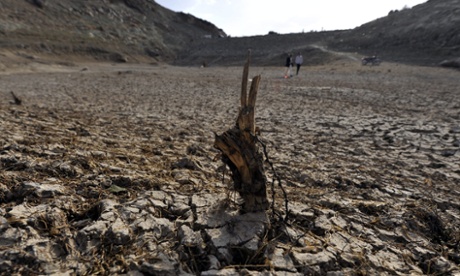
Global warming results drought faster and harder

Yemenis walk through a drought-affected dam on the outskirts of Sana'a, Yemen.  Sana a city is running out of water and many relief agencies feel that it could become the first capital city in the world to run out of a viable water supply.A new study tries to separate natural and human influences on drought

Yemenis walk through a drought-affected dam on the outskirts of Sana'a, Yemen. Sana a city is running out of water and many relief agencies feel that it could become the first capital city in the world to run out of a viable water supply. Photograph: Yahya Arhab/EPA

We all know that some climate change is natural, in fact, even without humans, the Earth’s climate changes. But, as we have added heat-trapping gases to the atmosphere, we have seen human influence “emerge” from natural variability.

Droughts, one of the most intensely studied climate events, are a perfect example of an effect with both human and natural influences. Separating the relative strengths of the influences is a challenge for scientists. But, when we deal with drought, with its large social and economic costs, it is a challenge we must undertake.

A very recent study tries to do just this. Published in the Journal of Climate, authors Richard Seager and Martin Hoerling cleverly used climate models forced by sea surface temperatures to separate how much of the past century’s North American droughts have been caused by ocean temperatures, natural variability, and humans. What they found was expected (all three of these influence drought), but it's the details that are exciting. Furthermore, the methodology can be applied to other climate phenomena at other locations around the globe.

The very beginning of their paper sets a great framework for the study,

    “In a nation that has been reeling from one weather or climate disaster to another, with record tornado outbreaks, landfalling tropical storms and superstorms, record winter snowfalls, and severe droughts, persistent droughts appear almost prosaic. Droughts do not cause the mass loss of life and property destruction by floods and storms. They are instead slow-moving disasters whose beginnings and ends are even often hard to identify. However, while the social and financial costs of hurricane, tornado, and flood disasters are, of course, tremendous, droughts are one of the costliest of natural disasters in the United States.”

Droughts can be caused by a variety of isolated or interacting phenomena. At its root, drought results from lowered precipitation and sometimes higher temperatures (which increase evaporation rates). The onset of drought can often be linked to variations in ocean temperatures. For instance, La Niña events in the Pacific Ocean as well as elevated Atlantic Ocean temperatures have coincided with United States droughts.

In fact the authors state that the three mid-to-late 19th century droughts, the Dust Bowl, and the drought in the 1950s all depended on persistent La Niña conditions. Of course, other factors played roles as well and ocean temperatures simply don’t explain everything. Perhaps the best example of multiple drought factors is the Dust Bowl of the 1930s. Then, cool Pacific temperatures were not by themselves sufficient. It is likely that land use changes associated with farmland erosion and natural atmospheric variability also played roles.

The authors, therefore, wanted to move beyond a simplistic association of La Niña episodes and warm Atlantic Ocean waters with the occurrence of drought. They asked what other causes might there be and how will things change in the coming years and decades?

Using precipitation data from the University of East Anglia and ocean temperatures from the Hadley Centre combined with climate models, the researchers were able to add or omit the oceanic temperatures and compare the two sets of results. They found that ocean temperature variations cause up to 40% of the changes to precipitation, depending on location. They also found that the oceans can “nudge” the atmosphere to create conditions that are amenable to drought, and that temperature increases associated with human-driven global warming also play a role. In fact,

    “The warming leads to a simulated long-term reduction in soil moisture which, although of weak magnitude compared to soil moisture deficits induced by naturally occurring droughts in the southwest United States, would imply that drought conditions may be entered more quickly and alleviated more slowly owing to long-term warming … Radiative forcing of the climate system is another source of predictability, although not really a welcome one, and rising greenhouse gases will lead to a steady drying of southwest North America. However this is a change that is only now beginning to emerge and currently is exerting less influence on precipitation variability than ocean variability or internal variability.”

This conclusion agrees with other researchers who have shown that, while human-emitted greenhouse gas warming may not cause a particular drought, it can make drought come on earlier, faster, and harder than it otherwise would.

There are two issues that I will be watching closely. The first is that any extra damage caused by drought as a consequence of human emissions will not scale linearly with attribution. For instance, if human impacts are responsible for 10% of a drought’s severity, it does not mean that human impacts are responsible for 10% of the social or economic cost.

A great example of this is with Superstorm Sandy. While admittedly not a drought, the example will make the point. It has been estimated that human-caused increases to water temperatures caused perhaps 10% more rain to fall. This extra 10% rainfall caused more than 10% of the economic damages associated with rainfall. Similarly, the human-induced sea level rise of 1 foot was only about 10% of the storm surge. But, this extra foot caused a disproportionate amount of flood damage. With this in mind, I would really like to know how the social and financial costs will change in the future as droughts set in earlier, faster, and harder because of greenhouse gas warming.

Secondly, there may well be a human influence on these otherwise natural causes. For instance, scientists have argued that greenhouse gas warming may change the ocean temperature fluctuations, particularly in the Pacific. Similarly, there are many new studies linking increasing greenhouse gases with atmospheric circulation changes. Since both of these features affect drought, they appear, at least to me, to be potential indirect human influences.

We will have to wait to learn more, let’s hope the wait isn’t too long.

-post by John Abraham
-theguardian

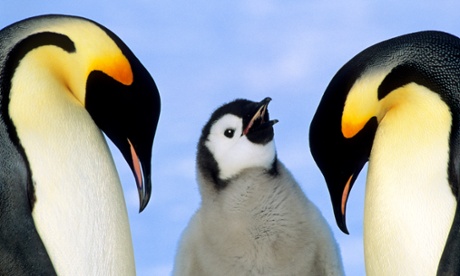
Emperor penguins at risk of extinction scientists warn

Adult emperor penguins (Aptenodytes forsteri) and chick, Atka Bay colony, Weddell Sea, Antarctica.
The entire population of Antarctica's famous emperor penguins could fall by a third by the end of the century because of disappearing sea ice, putting them at risk of extinction, researchers said on Sunday.

The finding justified protecting emperor penguins under the endangered species act – as America already does for polar bear – the researchers writing in the journal Nature Climate Change said.

They also called for marine reserves to buffer the fish stocks penguin need to survive.

“The population is declining. Unless something changes to stop that, the population will go into extinction,” said Hal Caswell, senior scientist at Woods Hole Oceanographic Institute, and one of the authors.

As a top predator in Antarctica, the main threat to emperor penguins’ survival comes from climate change which is melting the sea ice.

The loss of sea ice is reducing the supply of krill, the tiny shrimp-like crustaceans that populate the Southern Ocean, and are the emperor penguins’ main food source. Young krill feed off of algae living in the sea ice. When the ice goes, so do the krill.

Changes in the ice around Antarctica may - in the short term - boost some of the emperor penguin populations, especially along the Ross Sea, the researchers said. Sea ice off the western coast of Antarctica has been on the increase, because of break-up of glaciers and winds.

But by 2100, all 45 known emperor penguin colonies of Antarctica will be on the decline because of loss of sea ice. Those located on the coasts of the eastern Weddell Sea and the western Indian Ocean will show the sharpest drops. Nine colonies are projected to be “quasi-extinct”, the researchers said.

Global number of breeding pairs of emperor penguins from 2009 to 2100
Other studies have raised the threat to emperor penguins under climate change, suggesting the ordinarily hardy 3ft animals are susceptible to rising heat. Smaller penguins like the Chinstrap and Adelie are also at risk from warming.

Researchers from the University of Minnesota last week suggested some emperor penguins may be better equipped to adapt to changing ice conditions than previously thought, by moving their colonies.

But the Woods Hole researchers said their study was the first to forecast a population decline across all of Antarctica. Their study also suggested there was little scope for penguins to adapt to the changing ice conditions.

The researchers said the findings called for urgent measures to help the penguins survive – such as legal protections under America’s endangered species act and the creation of marine reserves off Antarctica.

“Implementing a marine protected area in the Ross Sea could help buy time to avoid extinction and to put in place needed conservation and greenhouse gas mitigation strategies,” Stephanie Jenouvrier, lead author and a scientist at Woods Hole, said in a statement.

A marine reserve would potentially put large areas of ocean off-limits to fishing – reducing the pressure on krill stocks and giving the penguin a better chance at survival, said Andrea Kavanagh, director of global penguin conservation for the Pew Charitable Trusts.

“Given this new research, and what we already know about global temperatures warming and the changing climate, one of the things we should do immediately is put a marine reserve in place so we can make sure that we are not fishing in areas where the penguins need to forage for food,” she said. “It is one way of eliminating one more threat to the penguins.”

The study used observations from the colony at Terre Adelie in East Antarctica that has been extensively studied, and satellite data from other known colonies.

-Theguardian

Monday, June 2, 2014

Sun belches out radiation plume SEVEN times the size of Earth

By Ellie Zolfagharifard
    
Iris must commit to pointing at certain areas of the sun at least a day in advance, so catching a CME in the act involves some educated guesses and a little bit of luck. Pictured is the solar flare captured by Iris (right) and the same flare later seen by the Solar Dynamics Observatory (left)

  • The huge curtain of solar radiation erupted on May 9 but didn't affect Earth
  • It was the first ever coronal mass ejection (CME) observed by the Iris probe
  • During a CME, changes in sun’s magnetic fields can cause a section of the solar surface to expand, ejecting billions of tonnes of particles into space
  • CMEs can disrupt communication signals and cause surges in power grids
Nasa’s latest solar observatory has captured footage of the sun belching out a stream of charged particles at 1.5 million miles per hour.
The curtain of radiation, which erupted on May 9, was the first coronal mass ejection (CME) observed by the Interface Region Imaging Spectrograph, or Iris.

The footage reveals the CME in ‘extraordinary detail’ showing a field of view about five Earths wide and seven-and-a-half Earths tall.

HOW DO CORONAL MASS EJECTIONS IMPACT EARTH?

CMEs are a mass of charged particles and magnetic field energy that bursts from the sun like a volcanic eruption.
Material from a coronal mass ejection takes two to three days to reach Earth, but in this case, the coronal mass ejection didn't affect our planet.
Coronal mass ejections interact with Earth’s magnetic field to generate auroras and magnetic storms.
The CME's magnetic fields peel back the outermost layers of Earth's fields changing their very shape, distortions which can can degrade communication signals and cause unexpected surges in power grids.
They also can cause aurora. Storms are rare during solar minimum, but as the sun nears solar maximum, large storms occur several times per year.
Because the observatory has to position itself a day in advance, it was a stroke of luck that the eruption happened just as the probe was pointing the right way.
‘We focus in on active regions to try to see a flare or a CME,’ said Bart De Pontieu, the Iris science lead at Lockheed Martin Solar and Astrophysics Laboratory in California.

And then we wait and hope that we'll catch something. This is the first clear CME for Iris so the team is very excited.’
During a CME, changes in the sun’s magnetic fields cause a large section of the surface of the sun to expand rapidly, ejecting billions of tonnes of particles out into space.

Material from a coronal mass ejection takes two to three days to reach Earth, peeling back the outermost layers of the planet’s magnetic field.

CME’s can degrade communication signals and cause unexpected surges in power grids. However, this CME is not thought to have made a significant impact on Earth.
CME’s often accompany a solar flare – a solar eruption that pushes out waves of light all across the spectrum.

Iris can observe both types of eruption. It was launched in June 2013 to study what's known as the interface region, which is a layer between the sun's surface the corona that has long baffled scientists.

This close-up of the sunspot underneath the March 29, 2014, flare shows incredible detail. The image was captured by the G-band camera at Sacramento Peak in New Mexico. This instrument can focus on only a small area at once, but provide very high resolution

HOW DO FLARES AFFECT US?

Solar flares can damage satellites and have an enormous financial cost.
Astronauts are not in immediate danger because of the relatively low orbit of this manned mission. They do have to be concerned about cumulative exposure during space walks.
The charged particles can also threaten airlines by disturbing the Earth’s magnetic field.
Very large flares can even create currents within electricity grids and knock out energy supplies.
A positive aspect, from an aesthetic point of view, is that the auroras are enhanced.
Geomagnetic storms are more disruptive now than in the past because of our greater dependence on technical systems that can be affected by electric currents.
By capturing light emitted by atoms of different temperatures, Iris can looks at different heights above the sun's surface to analyse this obscure layer. 
The line moving across the middle of the movie is the entrance slit for Iris’ spectrograph, an instrument that can split light into its many wavelengths – a technique that ultimately allows scientists to measure temperature, velocity and density of the solar material behind the slit.
While the strength of this CME is yet to be revealed, it follows on the heels of the most powerful type of solar flare that’s ever been recorded by the space agency.
The huge event on the sun occurred on 29 March 2014, but Nasa has only now analysed the data from their fleet of observatories.
This fleet consisted of four telescopes in space and one observatory on Earth.
The flare observed was an X-class flare, the biggest and highest-energy solar flares that have ever been observed. 

Friday, May 23, 2014

Blood from a rare group of children immune to malaria

Scientists find rare group of children who are naturally immune to malariaBlood from a rare group of children from Tanzania, found to be naturally immune to malaria has now helped scientists take a giant leap in developing a vaccine against the world's deadliest vector borne disease — malaria.

Researchers from the Brown University School of Medicine have found that these children produce an antibody that attacks the malaria-causing parasite. Antibody is an infection-fighting protein produced by our immune system when it detects harmful substances.

Injecting a form of this antibody into mice protected the animals from the disease. Scientists say these antibodies would ultimately reveal the Achilles heel of malaria and help create the elusive vaccine.

This same principle has been used over the years in the work to create the world's first HIV vaccine. Globally, scientists have been trying to identify volunteers belonging to a rare group of HIV infected patients who stay healthy for years without requiring life-saving antiretroviral treatment (ART). The antibodies in their blood has been found to bar HIV from entering their blood cells and replicating, thereby progressing into AIDS.

Prof Jake Kurtis from the University screened 1,000 children in Tanzania, who had regular blood samples taken in the first years of their lives. Around 6% of these children were found to have developed a naturally acquired immunity to malaria, despite living in an area where the disease was highly active.

Scientists then looked into their blood and found a unique antibody that dealt a deadly blow to the malaria parasite at a key stage in its life-cycle. It trapped the tiny organism in red blood cells, preventing it from bursting out and spreading throughout the body.

Prof Kurtis said, "We asked what were the specific antibodies expressed by resistant children that were not expressed by susceptible children. Tests, carried out in small groups of mice, suggest this antibody could act as a potential vaccine. The survival rate was over two-fold longer if the mice were vaccinated compared to unvaccinated - and the parasitemia (the number of parasites in the blood) were up to four-fold lower in the vaccinated mice". Dr Kurtis and Dipak Raj of Brown University and Rhode Island Hospital have named their antibody PfSEA-1.

Dr Kurtis said, "PfSEA-1 was discovered by starting with naturally occurring protective human immune responses. Using molecular gymnastics, we identified parasite proteins that are only recognized by antibodies in children who were resistant to malaria but not by antibodies in susceptible children. We subsequently demonstrated that vaccination with one of these proteins, SEA-1 could protect mice from a lethal malaria infection. More importantly, in our cohort of over 750 children, kids who made antibodies to PfSEA-1 did not develop severe malaria, while children without these antibodies were susceptible to this severe complication".

"PfSEA-1 is essential to allow the parasite to escape from one infected red blood cell and infect additional blood cells. This cycle of expansion in red blood cells is critical for parasite survival and is the key process that leads to morbidity and mortality in humans. Using molecular techniques, we decreased the amount of PfSEA-1 that parasites could produce and demonstrated that these altered parasites had a significant growth defect. More importantly, antibodies to PfSEAs prevent the parasites from escaping from red blood cells, presumably by interfering with the function of PfSEA-1."

According to Dr Kurtis, there are three major areas for further study. "First, we need to understand the role that PfSEA-1 plays in the process of parasite egress from red blood cells. Cellular immunity is critical for long-lived antibody responses, but detailed analysis of cellular responses requires fresh blood samples, thus we are currently planning to enroll new cohorts in east Africa to address this question. We also need to move PfSEA-1-based vaccines into nonhuman primate challenge trials using human-use approved vaccine adjuvants. Following successful nonhuman primate studies, Phase I safety trials in humans can begin," he said.

The most recent figures from the World Health Organization suggest the disease killed more than 600,000 people in 2012, with 90% of these deaths occurring in sub-Saharan Africa.

Thursday, September 2, 2010

God did not create the universe : Hawking

God did not create the universe: Hawking
London: British physicist Stephen Hawking has said that the creation of the universe was a result of the inevitable laws of physics and it did not need God's help.

In his latest book titled "The Grand Design", Hawking writes: "Because there is a law such as gravity, the universe can and will create itself from nothing. Spontaneous creation is the reason there is something rather than nothing, why the universe exists, why we exist."

God did not create the universe: Hawking

He rejects Isaac Newton's theory that the universe did not spontaneously begin to form but was set in motion by God. He wrote in the 1988 book: "If we discover a complete theory, it would be the ultimate triumph of human reason -- for then we should know the mind of God."

"It is not necessary to invoke God to light the blue touch paper and set the universe going," the Daily Telegraph quoted Hawking as writing in his current book.

God did not create the universe: Hawking

Hawking argues that the Big Bang which resulted in the creation of the Solar System and planets, including the earth, was the result of the inevitable laws of physics and God was nowhere in the picture. Earlier, a few scientists, including Hawking himself, had said that the sparkplug that kickstarted the universe through the Big Bang was probably provided by God.

God did not create the universe: Hawking

Extracts of The Grand Design was published in Eureka magazine in The Times. And in that Hawking is quoted as saying: "It is not necessary to invoke God to light the blue touch paper and set the Universe going."

Hawking had been putting forward the `no-God' theory for quite some time. In June, he had told a Channel 4 series that a "personal" God did not exist.

God did not create the universe: Hawking

"The question is: is the way the universe began chosen by God for reasons we can't understand, or was it determined by a law of science? I believe the second. If you like, you can call the laws of science 'God', but it wouldn't be a personal God that you could meet, and ask questions."

God did not create the universe: Hawking

However, there are unexplained phenomena in astrophysics. For example, researchers are yet to identify the `dark matter' that comprise over 75 per cent of the universe. Black holes, dark energy and God's particle -- phenomena that resulted either in the formation of the universe or in its death, have not been conclusively explained by science.

The Grand Design, co-written by American physicist Leonard Mlodinow, is published on September 9.

Source: IANS, India Syndicate