Showing posts with label BSE. Show all posts

Tuesday, September 2, 2014

NSE Nifty made history today Sep 2 2014 hit 8100

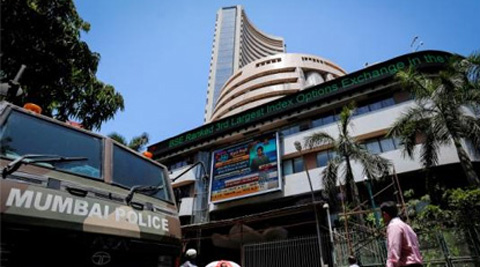
BSE Sensex zooms to new high of 26,867.55.The NSE Nifty made history today ( September 2) when it hit the 8,100-mark for the first time, but I am personally not as excited about it as I was when the Bombay Stock Exchange Sensex crossed the 25,000 mark some time ago, and look forward to the index besting 30k some time by March – as some experts are assuring us it will. I myself tend to make predictions more on the Sensex than the Nifty.

This love-affair with the Sensex is illogical, for, as The Economic Times assures us, the Nifty is a more solid index. It has 50 stocks in it (against 30 in the Sensex), a higher market capitalisation (Rs 55 lakh crore versus the Sensex’s Rs 45 lakh crore), and higher price-earnings and price-to-book multiples, not to speak of being the base for the entire market for derivatives. If you are married to money, like many foreign institutional investors (FIIs) and fund managers are, you have to be married to the Nifty.

But love-affairs are driven more by emotion than logic. And so the public is likely to track the Shifty Sensex more than the Nifty Fifty.

I must confess, I have a personal interest in the Sensex because I was one of the unofficial midwives around the time of its unofficial birth.

Some time in 1988 or 1989, a chartist called Deepak Mohoni – now  a popular face on business TV channels for his technical analysis – met me (I was then editor at BusinessWorld) to demonstrate how good his charts on the BSE Sensitive Index were. He wanted me to use the software, but I was more interested in the technicals output. As I remember it, Mohoni was not happy with the use of a long name like BSE Sensitive Index, and was looking for a shorter – sexier – name, and hit upon the acronym of Sensex. I was one of the first editors to use the shorter form in BusinessWorld magazine, and the short-form soon caught on with the investing public.

However, I root for the Sensex more than the Nifty not only because I was present at the former’s birthing, but because it simply has more oomph. Some reasons why…

One, being more volatile, it can demonstrate more dance-floor moves than the Nifty. People love the Sensex for the same reason why the Dow Jones Industrial Average – with all its idiosyncratic volatility – is watched more than the S&P 500 in the US. A 25-30-point move in the Nifty is less exciting than a 100-point surge in the Sensex even though they tell us the same story.

Two, to know the direction of the wind, you need a weathercock more than a barometer. The weathercock registers the smallest shifts in wind direction; a barometer measures changes in atmospheric pressure, which is important to tell something about the broader weather, but not good enough to tell me which way the wind is blowing now. The Sensex is more weathercock than barometer; the Nifty is a bit of both – barometer and weathercock.

Three, I believe the Sensex measures the demand and supply situation for stocks better than the Nifty for the simple reason that it is less influenced by pure speculation in the derivatives market. The Sensex has practically no futures and options (F&O) presence; the Nifty’s direction is practically defined by the F&O market. Sensex derivatives are just 1 percent of the Nifty F&O market. Some market purists will say the real market is a mix of both cash and derivatives. I won’t quarrel with them. But I believe that the Sensex tells us what the market for stocks is like now; the Nifty tells us about current and future sentiment, including speculative intent. You can like either of them depending on what your own investment intent is.

This is a neat reversal of the actual history of the Sensex and the Nifty. It was the BSE that was once considered a den of unbridled speculation that often led the bourse towards infamous defaults. The NSE was created to ensure a disruption-free market environment where the players were not the umpires. The NSE today is a safe market, and so is the BSE. But speculation drives the NSE more than the BSE.

Four, however, this is not to say that the BSE is better than the NSE. In fact, if I buy or sell anything – which is rare, since I am a buy-and-hold type of investor, not a speculator – I tend to use the NSE because it gives me finer rates. This is also why institutional investors with large buy and sell orders prefer the depth of the NSE. The NSE cash market is five times as big as the BSE (daily average Rs 15,441 crore in 2014 versus BSE's Rs 3,043 crore), but it is still the Sensex that pumps up the adrenalin.

Five, the Sensex also had the early mover advantage. One tends to remember first-loves better than subsequent flings.

If I were to put it simply, the SenSEX has more sex appeal, even if the Nifty is less fickle. The Sensex is about heart, the Nifty about mind. May both prosper.

Monday, September 20, 2010

Sensex crosses 20,000

The Bombay Stock Exchange Sensex crosses 20,000 points, first time since January 2008, a 32-month high in the opening session today.

Sensex crosses 20,000

Mumbai: The BSE benchmark Sensex shot up by over 135 points to regain the magical 20,000-level in the opening trade today for the first time since January 17, 2008, on spurt in buying of oil and gas, capital goods and banking sector stocks.

The 30-share index of the Bombay Stock Exchange surged by 135.42 points to 20,041.52 in the opening trade, for the first time since January 17, 2008. All the sectoral indices were trading with gains up to 1.30 per cent.

Similarly, the wide-based National Stock Exchange also crossed the crucial 6,000 points to trade 36.40 points higher at 6,016.85 points.

Both indices have regained these levels after almost 32 months. Analysts said sustained inflows of overseas funds, bolstered by fast expanding economy, helped indices to touch the 32-month high.

PREOPEN:Indian shares seen testing 20,000 since Jan 2008

India's main stock index could test 20,000 on Tuesday for the first time since January 2008, bolstered by rising foreign investor interest in the country's fast-expanding economy.

Sensex crosses 20,000

The 30-share BSE index ended up 1.6 percent at 19,906.10 points on Monday, after hitting 19,927.30. It has risen 10.8 percent this month on the back of foreign fund inflows of nearly $3 billion.

Outsourcers will be watched after Finance Minister Pranab Mukherjee said late on Monday India was worried that recent comments by U.S. President Barack Obama could lead to increased protectionism and would raise the issue when G20 leaders meet in South Korea.

The MSCI's measure of Asian markets other than Japan was barely changed at 0251 GMT, while Japan's Nikkei climbed 0.4 percent.

The Nifty India stock futures in Singapore were up 0.7 percent.

STOCKS TO WATCH

* EIH Ltd after the hotel chain said it would hold a meeting of its board of directors on Thursday to consider issue of shares on rights basis.

* Resurgere Mines after the company said its board had planned to meet on Saturday to consider and approve raising funds via equity or debt.

* Navin Fluorine International after the company said it would consider buyback on Friday.


Sensex crosses 20,000

FACTORS TO WATCH

* India rupee retreats from 3-month peak on import demand

* Indian bonds, OIS steady; supply, data key

* FOREX-Aussie dollar rises briefly after RBA minutes

* NYMEX-Crude retreats ahead of Fed meeting

* Stocks rise on S&P 500 rally. dollar slips

* US market ends more than 1 pct higher, S&P clears levels

Source: Indian Express

Friday, September 17, 2010

Mandarin will soon be part of the CBSE curriculum.

HRD Minister Kapil Sibal said this was the best way to introduce China to India. MANDARIN, the language spoken by the majority of the Chinese, will soon be part of the CBSE curriculum as India and China discussed modalities on Wednesday to train a large number of Indian teachers to acquire the language skills necessary to make it part of the course.

Mandarin will soon be part of the CBSE curriculum.

"China is a powerful neighbour and is emerging as a biggest consumer of global resources. The best way to introduce China in India is to introduce its language at the primary level so that our kids develop interest and knowledge about China," Human Resource Development Minister Kapil Sibal said.

Mandarin will soon be part of the CBSE curriculum.

The issue figured high on his talks with China's Education Minister Yuan Guiren, who promised to work out modalities to train Indian teachers in Chinese language in India.

"Let us get enough Indians to learn Chinese. Let us have a lot of Chinese trainers in India who will teach the school students. That is how we evoke interest in our kids about China," Sibal told Indian journalists here.

"I told Yuan I am willing to introduce Chinese in the BSE system as a course. I cannot do that unless I have standards and a there is a test. That cannot happen unless I collaborate with you," said Sibal, who also took part in the World Economic Forum in the Chinese city of Tianjin.

Mandarin will soon be part of the CBSE curriculum.

The Chinese side said that a two-way programme can be worked out to train about 200 teachers. Some can come here to learn and others can learn in India through different methods, Sibal said.
Sibal said he has already spoken to CBSE chairman Vineet Joshi and obtained his consent to make Chinese part of its curriculum.

Mandarin will soon be part of the CBSE curriculum.

Sibal has also proposed to China to extend its sponsorship programme to exchange scholars from universities in different subjects on the lines of Full Bright Scholarship.

India as a reciprocal gesture will support equal number of students, he said.

Mandarin will soon be part of the CBSE curriculum.

Sibal visited Peking University and held discussions with its officials on various subjects. To deepen the cooperation among universities, 10 Vice-Chancellors of India and China would meet here next month to discuss specific issues of collaboration.

Source: Indian Express

Monday, September 13, 2010

Sensex, rupee on a roll

Mumbai: Sensex regained the crucial 19,000-level in early trade on Monday, adding 287 points on fund-based buying driven by a firming global trend. The Nifty gained 83.60 points. Both the indices regained these levels after almost 32 months.

Sensex, rupee on a roll


The 30-share index of the Bombay Stock Exchange surged by 287.69 points to 19,087.35 in opening trade. It had risen by 132.95 points in the previous session.

The buoyant investor sentiment also propelled the wide-based National Stock Exchange Nifty past the 5,700-mark. The Nifty gained 83.60 points to 5723.65 in early trade today.

Banking stocks continue to shine Monday morning with Union Bank leading the rally. The stock has surged over 5% to Rs 374. SBI has jumped 4.2% to Rs 3,110.

The Sensex has continued to hold gains on the back of the upsurge in banking stocks. The index is now up 288 points at 19,088. Nifty is up 85 points at 5,725.

BSE mid and small-cap indices have under-performed the broader index. The mid-cap index has jumped 1% to 8,126 while the small-cap index has advanced 0.7% to 10,319.

The IIP numbers have also chered investors. India's industry began the second quarter on a strong footing, clocking 13.8% growth in July. The growth rate -- the highest in two months -- exceeded market expectations of moderation to 7.8%. The growth was driven by a strong showing by the manufacturing sector, particularly the capital goods segment.

Sensex, rupee on a roll

ICICI Bank has rallied 3.5% to Rs 1,087. HDFC Bank, however, is up just 1% at Rs 2,262. Other banking gainers include Canara Bank, Bank of Baroda, Punjab National Bank and Axis Bank.

Among Sensex stocks, HDFC has added 3% to Rs 649. Reliance Infrastructure and Tata Steel have added 2% each.

SCC, Reliance, Hindalco, ONGC and Larsen & Toubro are the other top gainers.

BSE market breadth is positive. Out of 2,862 stocks traded, 1,837 have advanced while 937 have declined.

Meanwhile, the rupee climbed to its highest in a month on Monday after robust factory output, and buoyed by a return in risk taking globally after strong data in the United States and China.

Sensex, rupee on a roll

In the morning, the partially convertible rupee was at 46.29/30 per dollar, after touching 46.2650, its highest since Aug. 10 and stronger than the close of 46.47/48 last week.

"There is some dollar selling seen after the strong IIP data. We could see a move towards 46 levels this week, but then it should start weakening again from there," said Ashtosh Raina, head of foreign exchange trading at HDFC Bank.

India's industrial output accelerated much faster than expected in July on surging capital goods production, strengthening the case for further monetary tightening by the central bank to tame near double-digit inflation.

Dealers said gains in the euro and other Asian peers also boosted sentiment for the rupee.

Almost all Asian currencies were stronger compared to the dollar. The index of the dollar against six majors was down 0.5 per cent.

Sensex, rupee on a roll

The euro surged on Monday as positive market sentiment following upbeat Chinese data and a lack of surprises from new banking rules sent it nearly 1 per cent up on the dollar.

The BSE Sensex were trading up 1.5 per cent, taking cues from the better-than-expected jump in factory output and strong Asian markets.

Foreign fund flows into local shares are a key determinant of the rupee's fortunes. So far this year, foreigners have bought shares worth more than $13.5 billion, in addition to last year's record $17.5 billion purchases.

One-month offshore non-deliverable forward contracts were at 46.44, weaker than the onshore spot rate.

"With US data continuing to be strong, we expect risk appetite to be positive this week. We expect the INR to play catch up with its regional peers, with USD/INR trading in a range of 46.10-46.70, with a downside bias," economists at Barclays Capital wrote in a note.

They expects the Reserve Bank of India to hike the repo and reverse repo rates by 25 basis points each at the central bank's policy review on Thursday

For details on stock movement see: msn.bankbazaar.com

Source: Business Standard and PTI
MSN Money